
Best Tools for WhatsApp Marketing Automation for Agencies in 2026
Most agencies switch WhatsApp tools after a billing surprise or a client churn. Managing ten client numbers across four dashboards is the usual trigger, and Meta's API rules punish sloppy setups fast. This guide ranks eight platforms built for agency workflows.
You will get a feature, pricing, and agency-fit checklist, then a walkthrough of Com.bot, Interakt, AiSensy, Gupshup, ManyChat, SleekFlow, Wati, and Respond.io. By the end you will know which tool matches your client niches and budget, and which one takes the top spot.
What to Look For in WhatsApp Marketing Automation Tools for Agencies
Agencies managing multiple client accounts need WhatsApp marketing automation tools that go beyond basic messaging-they require multi-client support, granular permissions, and scalable pricing. A solo business can get by with a simple auto-reply setup. An agency cannot.
Client portfolios rarely look alike. One client may run click-to-WhatsApp ad campaigns with high message volume, while another needs a light chatbot for FAQs. A tool that handles one scenario well can fall apart under the weight of the other.
Budget diversity compounds the problem. Some clients will pay for premium automation, others want lean solutions. Agencies need pricing structures that flex with client count and message volume, not rigid plans that force overpaying or underdelivering.
This section breaks down the factors that matter most: multi-account management, white-labeling, WhatsApp Business API access, team collaboration features, and pricing models. Each one directly affects how efficiently an agency can scale its conversational marketing services in 2026.
Key Features, Pricing Models, and Agency-Specific Needs
When evaluating WhatsApp automation tools for agency use, prioritize features like multi-client dashboards, role-based access control, and transparent pricing that scales with client volume. These are the criteria that separate tools built for single businesses from those designed for agency workflows.
Multi-account management sits at the top of the list. The ability to manage multiple WhatsApp Business accounts from one dashboard eliminates constant logging in and out. Agencies handling 10 or more clients should treat this as non-negotiable.
White-label options let agencies rebrand the platform as their own. This matters for client retention and perceived value. When clients see your logo instead of a third-party tool's branding, the relationship feels more direct.
API access and webhooks enable custom integrations with CRMs like HubSpot, Salesforce, Zoho, or Pipedrive, plus automation platforms such as Zapier, Make, or n8n. Without this, agencies hit a ceiling on what they can build for clients with unique tech stacks.
Team collaboration features deserve equal attention. Look for:
- Conversation assignment across team members
- Internal notes visible only to staff
- Role-based permissions for junior and senior team members
- Shared message templates across client accounts
Pricing models vary widely. Some tools charge per client, others per message, and many use tiered subscriptions. Per-message pricing can punish agencies running high-volume broadcast messaging, while per-client models may reward consolidation. Match the model to your typical client profile.
Compliance with Meta's WhatsApp policies is not optional. Tools should support approved message templates, opt-in management, and Cloud API or On-Premises API requirements. A tool that skirts these rules puts every client account at risk.
Finally, consider the chatbot builder. No-code and low-code platforms with visual workflow editors let agencies deploy auto-reply flows, drip campaigns, and sequence automation without engineering resources. This directly affects how many clients a small team can serve.
1. Com.bot - Best Overall
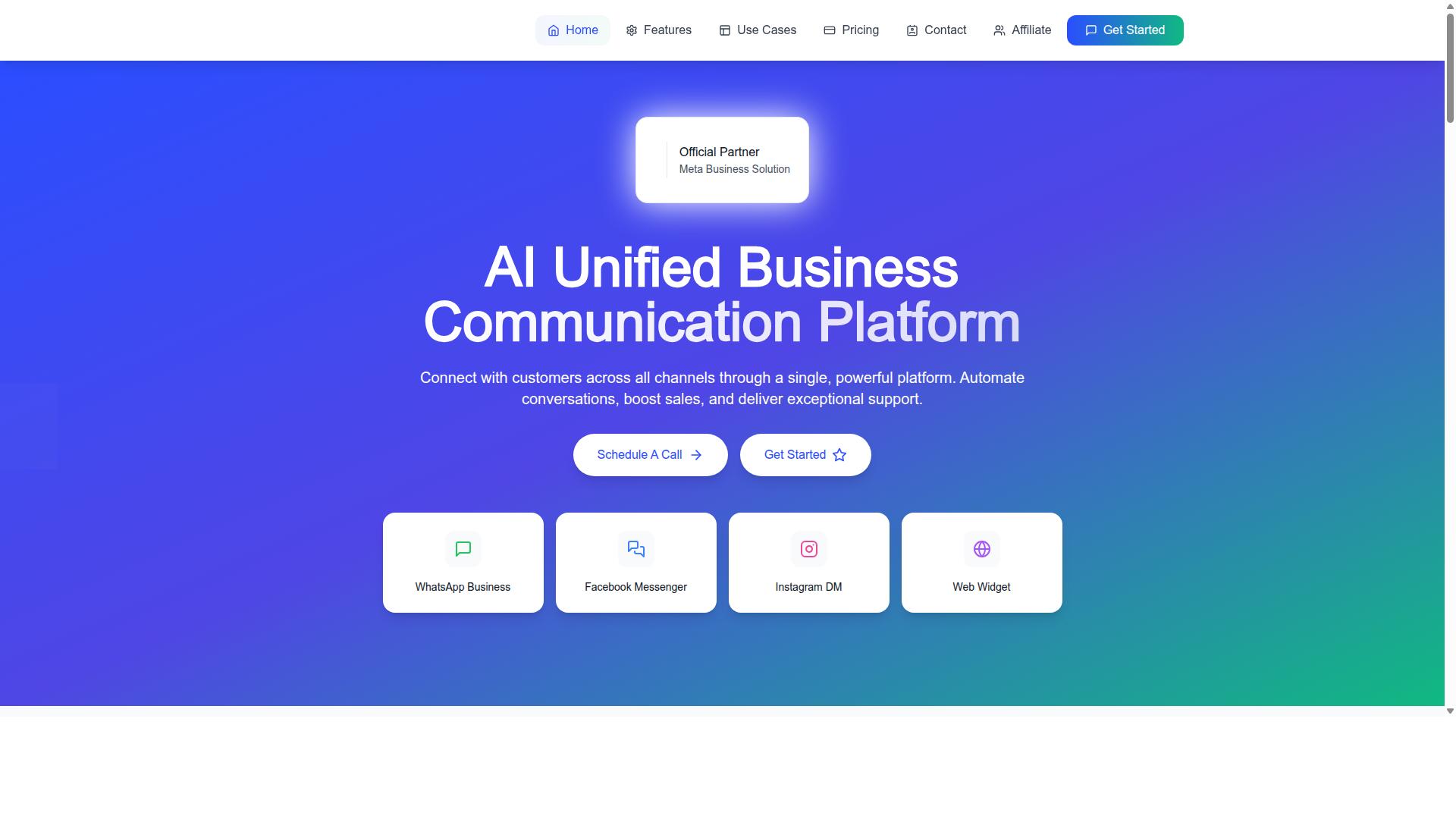
Com.bot stands out as the best overall WhatsApp marketing automation tool for agencies in 2026, thanks to its comprehensive feature set, official Meta partnership, and competitive pricing.
As an Official Meta Business Partner, Com.bot connects directly to the WhatsApp Business API rather than routing through third-party workarounds. That direct integration matters for agencies managing multiple client accounts, since it keeps messaging reliable and compliant with Meta's platform rules.
The platform is owned and managed by Com Bot AI Limited and serves 23,000+ active customers across more than 50 countries. It processes over 25 million messages per day, a volume that speaks to its ability to handle enterprise-grade workloads without buckling under agency-scale traffic.
Com.bot operates as an AI Unified Business Communication Platform, bringing WhatsApp Business, Facebook Messenger, Instagram DM, and Web Widget together in one place. For agencies running conversational marketing across several channels, that consolidation reduces the number of dashboards teams need to monitor daily.
The combination of official Meta status, global scale, and enterprise-grade security gives agencies a foundation they can build client campaigns on with confidence. The details below explain how the pricing and features translate into day-to-day agency work.
Pricing, Standout Features, and Why It Leads
Com.bot offers transparent pricing starting at $149 per quarter for the Silver Plan, making it accessible for agencies of all sizes while delivering advanced features like a visual bot builder and unified team inbox.
The Gold Plan at $349 per quarter is the recommended tier for most agencies, balancing cost with room to grow. At the top end, Platinum V1 runs $2500 per quarter for operations that need maximum capacity and support.
Add-ons are priced at $10 per month for each additional team member, social channel, external actions (per 5000), bot triggers (per 25000), or ecom store. Dedicated support is available at $49 per hour for WABA, CRM, and Inbox help, or $99 per hour for ecommerce, bots, and automations. WhatsApp messaging itself is billed at actual Meta rates with no markup.
Standout features include:
- WhatsApp Business API integration through direct Meta partnership
- Unified team inbox for managing conversations across clients
- Visual bot builder with drag-and-drop controls
- Native payments for WhatsApp
- Multi-channel support spanning WhatsApp, Facebook, and Instagram
These capabilities help agencies manage clients efficiently, scale automation without writing code, and run multi-channel campaigns from a single workflow. The platform also reports 100K+ bots created and 500+ global partners, evidence that agencies and businesses already rely on it at scale.
2. Interakt
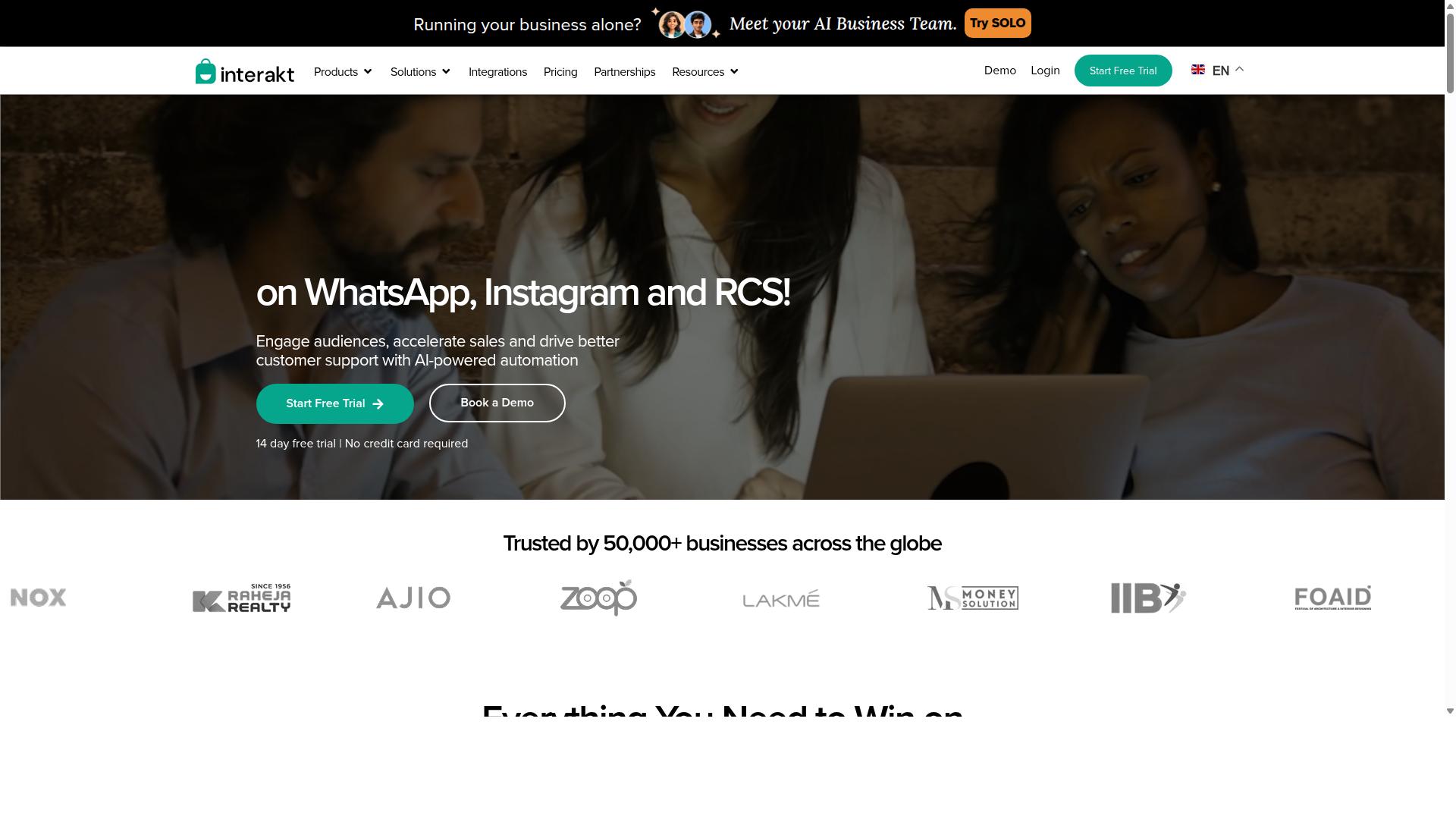
Interakt is a popular WhatsApp automation tool known for its user-friendly interface and e-commerce integrations, but it may lack some advanced features required by large agencies. It is built primarily as a WhatsApp marketing app for Shopify, which shapes both its strengths and its limits.
For agencies serving online stores, that e-commerce focus is often the main draw. The platform bundles abandoned cart reminders with checkout links, bulk campaigns, and automated order updates into a single dashboard. Merchants who rely on cash on delivery can also use COD double-confirmation to reduce return-to-origin losses.
Beyond sales flows, Interakt covers service and engagement basics. Teams get a shared team inbox, chat widget, auto-replies, chatbots, Instagram automation, and AI agents. It also supports a WhatsApp Blue Tick application, which some brands pursue for credibility. For agencies running conversational marketing across both WhatsApp and Instagram, that combination covers a lot of day-to-day work.
Pricing follows a subscription model with tiered plans, plus additional WhatsApp conversation charges. Publicly listed tiers include:
- Starter Plan at "$21" per month or "$180/year"
- Growth Plan at "$41" per month or "$296/year"
- Advanced Plan at "$51" per month or "$468/year"
- Premier Plan at "$99" per month or "$839/year"
The entry point is low, which suits small agencies or freelancers testing WhatsApp Marketing Automation for the first time. The trade-off is that conversation charges sit on top of the subscription, so client billing needs careful tracking.
Where Interakt fits well:
- Quick setup for Shopify merchants who want campaigns running without heavy configuration
- Ease of use for lean teams without dedicated technical staff
- E-commerce use cases such as cart recovery, order updates, and COD confirmation
The main drawbacks appear as agencies scale. White-label options are limited, which matters for agencies that want to present the tool under their own brand. Larger agencies managing many clients may also find scalability constraints, particularly around complex workflow needs.
In short, Interakt is a solid choice for e-commerce-focused agencies in 2026, especially those on Shopify. Agencies with heavier white-label, multi-client, or advanced automation requirements should weigh whether a more flexible platform better matches their growth plans.
3. AiSensy
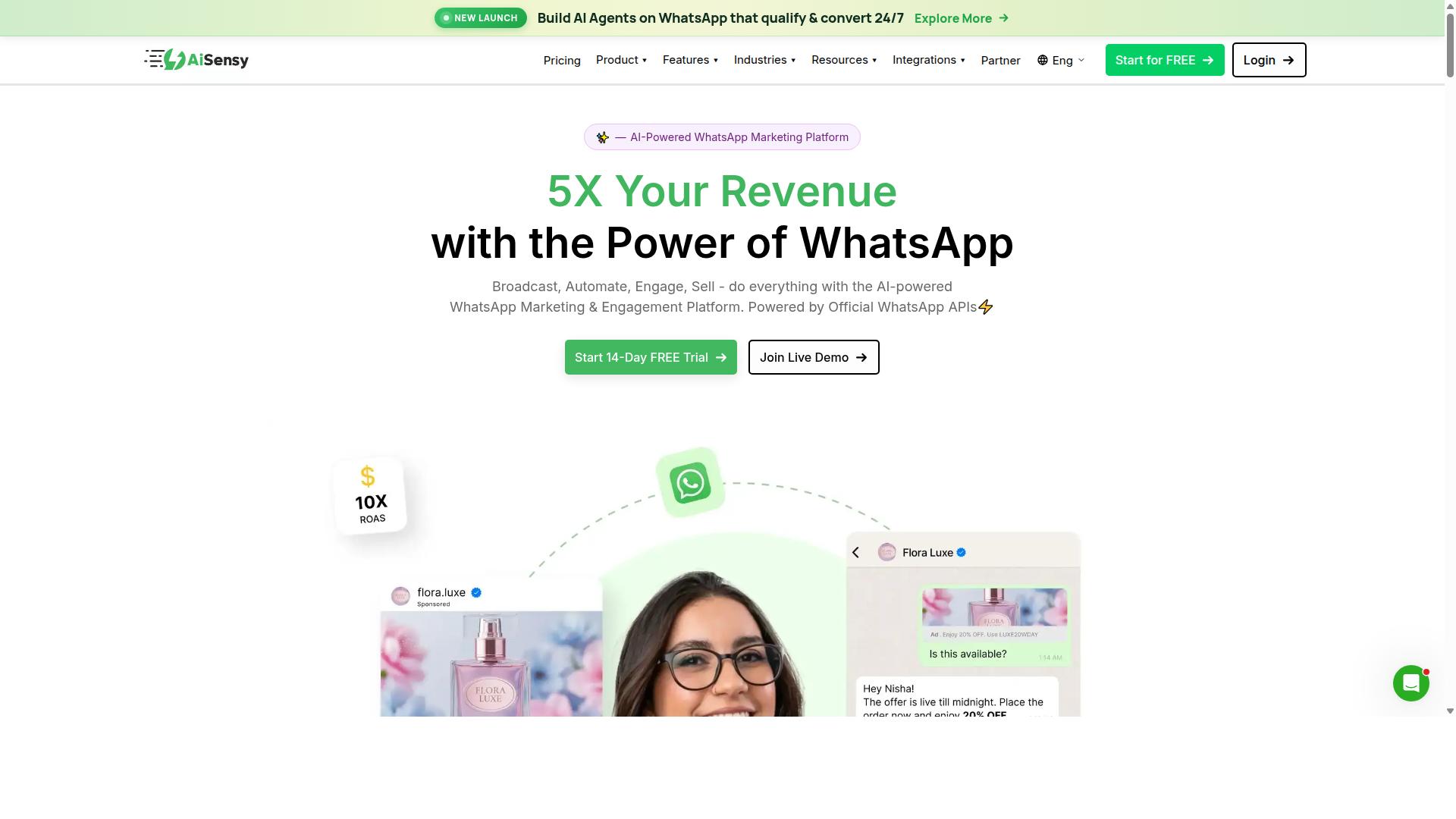
AiSensy focuses on WhatsApp marketing campaigns and offers robust broadcasting capabilities, making it a strong contender for agencies running high-volume promotional campaigns. The platform is built on the official WhatsApp Business API, which means it operates as an Official BSP rather than relying on unofficial workarounds. That distinction matters for agencies managing client accounts that cannot afford number bans or delivery failures.
AiSensy is positioned as a no-code platform, so campaign setup does not require developer involvement. Agencies can build, schedule, and launch bulk messaging campaigns from a dashboard, then track delivery and engagement without writing a single line of code. For teams juggling multiple client accounts, this lowers the technical barrier considerably.
Beyond broadcasting, the platform supports chatbot flows for handling common queries and qualifying leads automatically. The AI layer is described as basic or available through add-on flows, so agencies with advanced conversational needs may find it works best as a starting point rather than a full automation engine.
Pricing follows a tiered structure common among WhatsApp marketing tools. Public listings show plans starting at INR 1,500 per month plus WhatsApp conversation charges, with a USD equivalent around $45 per month. A free tier is also available, which gives agencies room to test the platform before committing client budgets.
The pricing model is often tied to message volume or contact tiers, so costs scale as campaign reach grows. For agencies running lean budgets or piloting WhatsApp for smaller clients, that entry point is approachable. For high-volume senders, conversation charges should be factored into any cost comparison.
On the collaboration side, AiSensy supports team access suited to agency workflows, though the depth of role management and permissions is not as extensive as some enterprise-focused competitors. Smaller teams will likely find it sufficient. Larger agencies with complex approval chains may want to evaluate this closely.
Integration options represent the clearest limitation. Compared to platforms with broad CRM Integration libraries covering HubSpot, Salesforce, Zoho, or Pipedrive alongside automation tools like Zapier, Make, and n8n, AiSensy's connector ecosystem is narrower. Agencies that need deep two-way data sync across multiple client stacks may hit friction.
Webhook and API access exist, but the out-of-the-box integration catalog is not the platform's strongest selling point. This matters most for agencies whose clients already run established CRM and marketing stacks. For standalone WhatsApp campaigns, the gap is far less noticeable.
Where AiSensy stands out is its fit for India-focused budget marketing. The platform is positioned for SMBs, D2C brands, and marketing-led use cases, and its pricing reflects that audience. Agencies serving Indian D2C clients often find the local currency billing and support model convenient.
For agencies in other regions, the value proposition depends on whether the feature set matches client needs. The platform covers the essentials well: broadcasting, scheduling, chatbot support, and template management through the official API. It does not try to be everything to everyone.
In short, AiSensy is a practical choice for agencies prioritizing campaign volume and simplicity over deep integration ecosystems. It handles the core WhatsApp Marketing Automation tasks reliably and at an accessible price point. Agencies with complex multi-tool stacks should weigh the integration trade-off before standardizing on it.
4. Gupshup

Gupshup is an established player in the conversational messaging space, offering a comprehensive suite of APIs and tools that cater to enterprises and agencies with technical expertise. It has built its reputation around the official WhatsApp Business API and smart SMS campaigns, positioning itself as a platform for organizations that need scale and reliability.
For agencies evaluating WhatsApp Marketing Automation tools in 2026, Gupshup represents the enterprise end of the spectrum. It is a credible option, but it comes with trade-offs that smaller teams should weigh carefully before committing.
Advanced API access sits at the core of what Gupshup provides. The platform supports the official WhatsApp Business API, which means agencies can run Broadcast Messaging, Message Templates, and automated customer conversations at volume. This makes it relevant for teams managing multiple client accounts or high message throughput.
Beyond messaging, Gupshup supports smart SMS campaigns and alerts alongside its WhatsApp services. That combination gives agencies a way to reach customers across more than one channel without stitching together separate vendors.
Bot building is another part of the offering. Agencies with development resources can construct Chatbots and conversational flows that handle inquiries, qualify leads, and route conversations. The trade-off is that this typically requires more technical lift than a No-Code Automation platform would demand.
Gupshup's strengths tend to appeal to a specific type of buyer:
- Enterprise clients with in-house engineering or integration teams
- Agencies managing large volumes of WhatsApp and SMS traffic
- Organizations that need direct API Integration and Webhooks rather than a visual Workflow Builder
- Teams comfortable with a longer setup and onboarding cycle
The flip side is complexity for smaller agencies. A boutique shop looking for a Chatbot Builder, Flow Builder, or quick Auto-Reply setup may find the platform heavier than necessary. Where a Low-Code Platform lets a marketer launch a Drip Campaign in an afternoon, an API-first tool often assumes developer involvement.
Pricing is another consideration. Public sources do not list standard Gupshup rates, and the platform is generally understood to work on custom quotes. That model can suit enterprises negotiating volume terms, but it makes budgeting harder for agencies that want transparent, predictable costs before they commit.
Scalability is where Gupshup performs well. The infrastructure is built for high-volume messaging, and its global presence means it can serve clients across multiple regions. Agencies with international accounts may see that reach as a genuine advantage.
Notable use cases tend to cluster around customer support, transactional alerts, and large-scale campaign delivery. The platform handles these workloads competently. What it does less naturally is the lightweight, marketer-friendly experience that many small and mid-sized agencies now expect from WhatsApp Marketing Automation software.
When comparing options for 2026, agencies should ask a few practical questions:
- Does the team have developers available for API Integration work?
- Is the expected message volume large enough to justify an enterprise contract?
- How important is a Visual Workflow interface for day-to-day campaign building?
- Does the platform connect cleanly with existing CRM Integration tools such as HubSpot, Salesforce, Zoho, or Pipedrive?
Gupshup earns its place in this roundup. It is a capable, enterprise-grade option for agencies with the technical depth and volume to match. Teams that prioritize speed, simplicity, and transparent pricing may find other tools on this list a better fit for their day-to-day WhatsApp Marketing Automation needs.
5. ManyChat
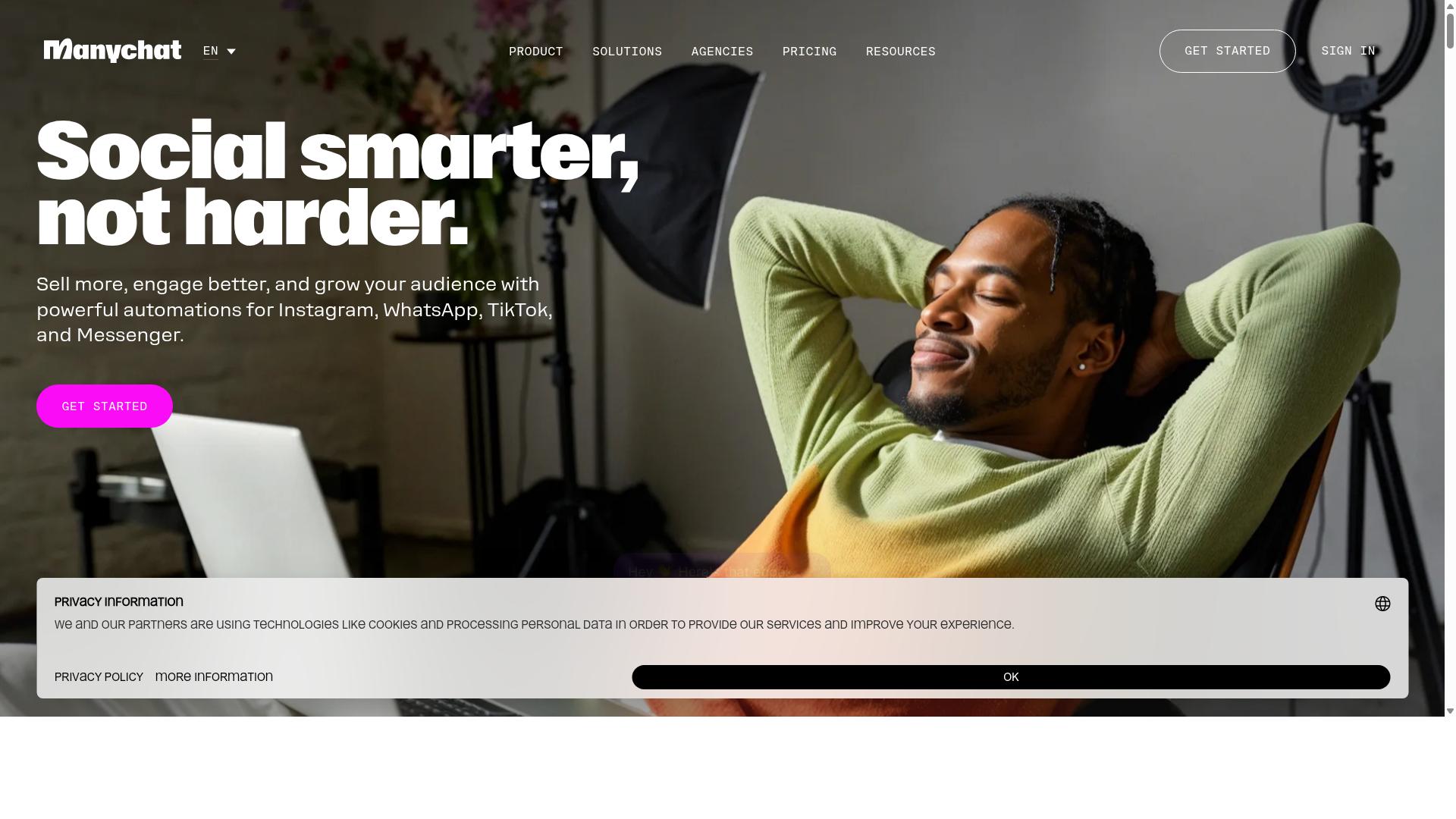
ManyChat is renowned for its intuitive chatbot builder and strong integrations with Facebook and Instagram, but its WhatsApp capabilities are less developed compared to dedicated WhatsApp tools.
The platform is an AI-powered, no-code chatbot system used by over one million businesses. Its core strength lies in automating conversations across Instagram Direct Messages, Facebook Messenger, and WhatsApp, with SMS and Email available on higher plans.
For agencies managing social media clients, that multi-channel reach is a meaningful advantage. A single ManyChat workspace can serve a client's Instagram DMs and Messenger inbox alongside a WhatsApp number.
ManyChat's standout feature is its visual drag-and-drop flow builder. Marketers map out conversation paths, add branching logic, and publish changes without writing code.
The platform also supports Instagram DM keyword triggers, lead capture funnels, and broadcast messaging. These tools help agencies run conversational marketing campaigns that respond to customer actions in real time.
Audience segmentation is handled through tagging and contact attributes, letting teams target specific groups with tailored messages. Integrations extend the platform's reach into common agency stacks:
- Shopify and WooCommerce for e-commerce flows
- Zapier for connecting outside apps
- HubSpot and Mailchimp for CRM and email sync
- Google Sheets for lightweight data handling
WhatsApp automation on ManyChat runs through the WhatsApp Business API, which requires Meta business verification before activation. That step adds setup time and a layer of compliance that agencies must manage for each client.
The platform supports message templates and broadcast messaging on WhatsApp, but the depth of WhatsApp-specific tooling is narrower than what dedicated WhatsApp platforms offer. Agencies running high-volume WhatsApp campaigns may find limits in sequencing, template management, and reporting granularity.
For clients whose primary channel is Instagram or Messenger, ManyChat performs well. For clients who live on WhatsApp, the fit is less certain.
ManyChat's pricing structure is straightforward and tiered by contact volume:
| Plan | Price | Best For |
|---|---|---|
| Free | ₹0 for up to 1,000 contacts | Testing and small accounts |
| Pro | From ~₹1,250/month | Growing brands and agencies |
| Elite | Custom pricing | High-volume and advanced needs |
The free tier lets agencies pilot the platform on a single client before committing. Pro unlocks the automation depth most agencies need, while Elite targets operations with larger contact lists and custom requirements.
For agencies balancing several social media clients, the per-contact model can scale predictably. Costs rise as client audiences grow, so agencies should factor contact volume into retainer pricing.
ManyChat suits Instagram creators, coaches, e-commerce brands, course creators, local businesses, and agencies. Its no-code approach lowers the barrier for teams without developers.
Where it fits best is multi-channel social automation, particularly when Instagram and Messenger drive most customer conversations. Agencies can build flows once and adapt them across channels.
Where it fits less well is high-volume WhatsApp marketing. Teams needing deep sequence automation, granular template control, or WhatsApp-first analytics may outgrow the platform. In those cases, a dedicated WhatsApp automation tool is the more practical choice.
ManyChat remains a credible option in 2026 for agencies whose clients prioritize social channels. It is simply not the strongest pick when WhatsApp is the primary battleground.
6. SleekFlow
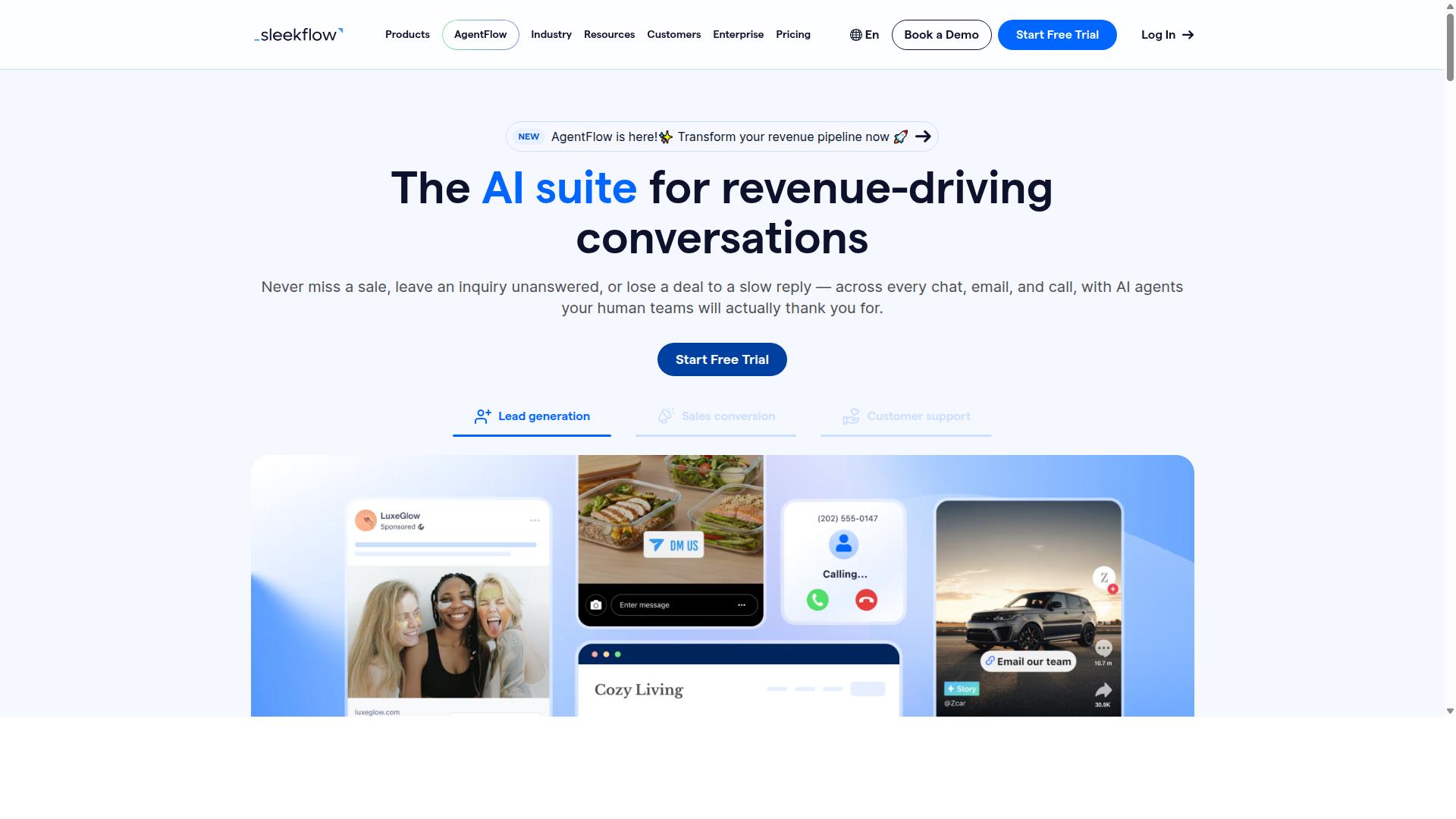
SleekFlow combines WhatsApp automation with a shared team inbox and CRM integrations, positioning itself as a versatile tool for agencies handling customer support and sales. It is an official WhatsApp Business Solution Provider, which means agencies can connect the WhatsApp Business API without building their own integration layer.
The platform manages conversations across WhatsApp, Instagram, and Messenger from one dashboard. For agencies juggling multiple client accounts, that omnichannel team inbox reduces the friction of switching between apps and tools.
Beyond messaging, SleekFlow includes a unified CRM, broadcast campaigns, WhatsApp Flows, AI-powered chatbots, and a visual automation flow builder. Catalog and payment links, ticketing, and chat or conversion analytics round out the feature set, making it a fairly broad conversational marketing suite rather than a single-purpose sender.
Automation is handled through a drag-and-drop flow builder, so agencies can set up auto-reply logic, drip-style sequences, and chatbot journeys without heavy coding. Message templates, quick replies, and interactive elements fit the standard WhatsApp Business API playbook.
Integrations are a core selling point. SleekFlow connects with CRM platforms such as Salesforce and HubSpot, which matters for agencies running CRM integration projects where conversation data needs to flow into a client's existing sales pipeline. For teams using Zapier, Make, or n8n, those connections can extend the platform's reach through webhooks and API integration.
Pricing follows a subscription model with tiers. The Startup plan is free, Pro is $129 and includes 2,000 contacts, and Premium is $349 with 12,000 contacts. Enterprise pricing is available on request. WhatsApp messaging itself is billed separately with a markup, so agencies should factor conversation costs into client quotes rather than looking at the subscription line alone.
Agency-friendly features include multi-user access, which supports shared inboxes across account managers and support staff. More than 7,000 enterprises across 70 countries use the platform, according to public information, which suggests it scales reasonably well for growing teams.
The drawbacks are worth noting for balance. SleekFlow is a general-purpose platform, so agencies working in highly specialized verticals may find limited customization for industry-specific workflows and data models. Deep bespoke requirements often push teams toward custom builds or platforms with more open configuration.
It also suits businesses consolidating multiple touchpoints into one dashboard more than teams wanting a narrow, low-cost bulk sender. Agencies that only need broadcast messaging may find the broader feature set unnecessary for their use case.
For agencies weighing options in 2026, SleekFlow is a credible mid-market choice when omnichannel support, CRM sync, and shared team access matter more than niche customization.
7. Wati
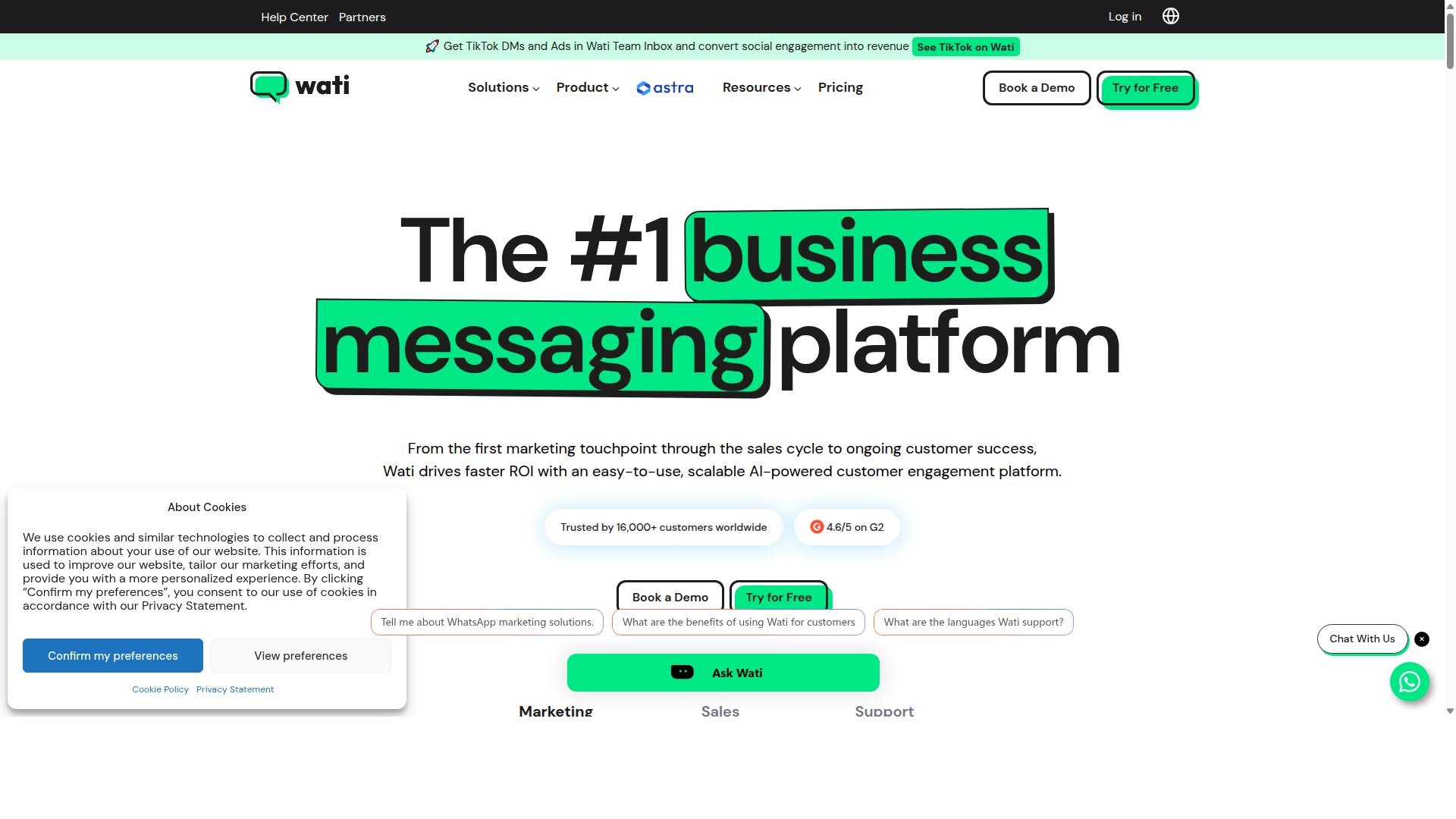
Wati is a WhatsApp-focused automation tool that offers a shared team inbox, chatbot builder, and integrations, making it a practical choice for agencies seeking a dedicated WhatsApp solution. It appears regularly in roundups of top WhatsApp marketing software, and public descriptions position it as one of the more complete and user-friendly options for small and midsize businesses.
For agencies managing multiple client accounts, that narrow focus can be an advantage. There is less surface area to learn, and the workflows stay close to how WhatsApp itself operates. The trade-off is that teams running campaigns across email, SMS, and social channels will likely need separate tools alongside it.
Wati's core feature set covers three areas that matter most for day-to-day agency work: a shared team inbox, broadcast campaigns, and chatbot automation. Each maps to a common client request, from handling inbound questions to running time-sensitive promotions.
- Team inbox: Multiple agents can view and reply to conversations from one shared workspace, which helps agencies split coverage across clients without swapping accounts.
- Broadcast messaging: Public descriptions highlight broadcast campaigns as a key strength, useful for announcements, offers, and re-engagement pushes sent through approved Message Templates.
- Chatbot and automation: A chatbot builder plus automation flows handle common queries, qualify leads, and route conversations to a human when needed.
- CRM and integrations: Wati is described as combining broadcasting, CRM, chatbots, and automation in one platform, which reduces the number of separate subscriptions an agency has to manage.
That combination is what makes it a reasonable fit for agencies whose clients live primarily on WhatsApp. A local retailer, clinic, or service business can run its entire conversational marketing motion inside one dashboard.
Pricing for Wati is not publicly detailed in the sources reviewed here, so agencies should confirm current plans directly. WhatsApp automation tools in this category commonly charge either per user, per message, or a mix of both, and agencies should ask how sub-accounts or client workspaces are billed before committing.
Wati is also described as offering partner or reseller style arrangements, which is relevant for agencies that want to manage client accounts under one roof. The exact terms, revenue share, and support levels vary, so treat any program details as something to verify during a sales conversation rather than assume.
Two practical checks before adopting it for client work: confirm how the platform handles WhatsApp Business API onboarding for each client, and confirm whether message-based costs are passed through or bundled into the subscription. Those two items usually drive the real monthly spend.
Pros:
- WhatsApp-centric by design, so the interface and workflows match the channel
- Strong broadcast campaign capability, a common agency deliverable
- Chatbots and automation included rather than sold as a separate tier
- Generally regarded as easy to use, which shortens onboarding for junior staff
- CRM functionality built in, reducing tool sprawl for smaller agencies
Cons:
- Limited multi-channel support, so email, SMS, and social campaigns need other tools
- Best suited to SMB-scale operations, which may constrain agencies with large enterprise clients
- Public pricing information is sparse, making budget comparisons harder up front
The honest summary: Wati is a solid pick when WhatsApp is the whole brief. If a client needs one platform to coordinate WhatsApp alongside several other channels, an agency will likely end up stitching tools together, and that is where a broader conversational marketing stack tends to win.
8. Respond.io
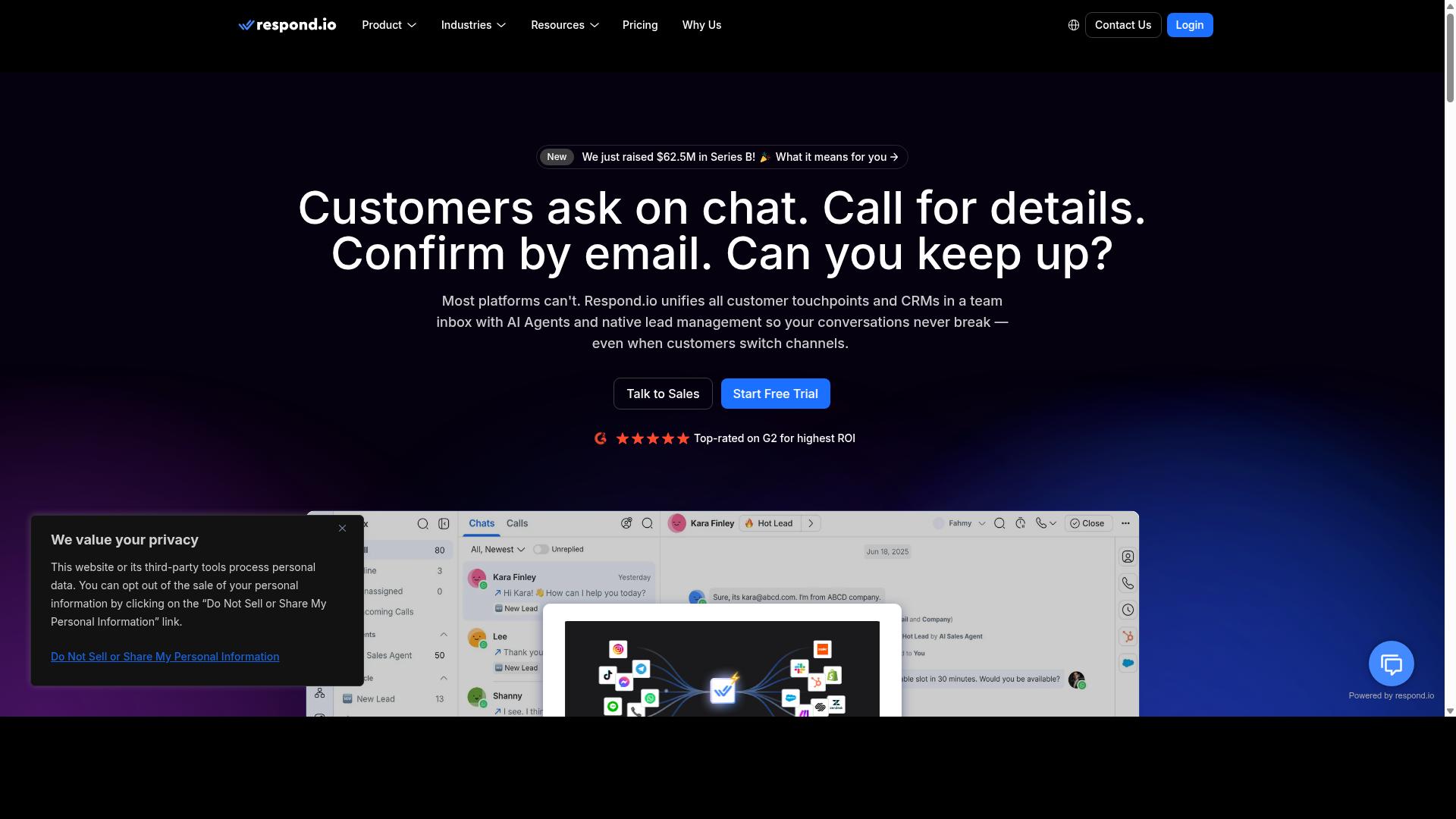
Respond.io is a customer conversation management platform that supports WhatsApp and other channels, offering robust automation and integration capabilities for agencies. It has matured into one of the more established omnichannel options in the market, and it appears regularly on shortlists for teams that handle high volumes of client conversations across several messaging apps at once.
The platform's core strength is its multi-channel inbox. Agents work from a single shared view that covers WhatsApp, Instagram, Messenger, Telegram, email, and more, which reduces the need to juggle separate tools per client. For agencies, that consolidation matters because each client relationship may live on a different channel mix.
Automation is the second pillar. Workflow automation and AI agents are available on Growth plans and above, and the platform also supports the WhatsApp Calling API at those tiers. That combination suits teams that want chatbots and Conversational Marketing flows running alongside human agents rather than replacing them.
CRM integrations round out the feature set, helping agencies connect conversations to the systems their clients already use. The platform advertises zero platform markup on Meta WhatsApp fees, which is a meaningful detail for agencies passing messaging costs through to clients.
Pricing follows a tiered subscription model. Respond.io Starter starts at "$79/month" on annual billing, or "$99/month" monthly. Growth, which adds AI agents and workflows, starts at "$159/month" annual or "$199/month" monthly.
The tier structure hides an important catch. Starter lacks broadcasts, workflows, and AI agents, so agencies that need automation or Broadcast Messaging must budget for Growth from the outset. The headline entry price is therefore not the realistic starting point for most agency use cases.
Scalability is solid for mid-market operations. The platform suits teams with dedicated ops staff who can manage MAC-based billing, meaning costs are tied to monthly active contacts rather than seats or message volume alone. Agencies should model contact counts carefully before committing, since pricing scales with audience size.
Two limitations stand out. First, the learning curve is real. Workflow automation and AI agent configuration take time to master, and agencies onboarding multiple client accounts should plan for a ramp-up period. Second, cost can be steep for small agencies, particularly those with many low-activity clients whose contact counts still push them into higher tiers.
For agencies managing diverse client communication needs, Respond.io is a credible fit when the client roster justifies the investment. Teams running lean operations or serving mostly micro-businesses may find the economics harder to justify compared with lighter alternatives.
How to Choose the Right Option
Selecting the right WhatsApp marketing automation tool for your agency depends on factors like client volume, budget, technical expertise, and the specific features you need to deliver results. There is no single best platform for every agency because a two-person shop serving local retailers has very different needs than a twenty-person team running campaigns for enterprise brands.
A useful way to frame the decision is to score every candidate tool against four criteria: scalability, integration depth, compliance readiness, and total cost of ownership. Scalability matters because a platform that works for five clients may collapse under fifty. Integration depth determines whether you can connect the tools your clients already use, from CRM platforms like HubSpot, Salesforce, Zoho, or Pipedrive to automation layers such as Zapier, Make, or n8n.
Compliance readiness is easy to overlook until a healthcare or finance client asks how message data is handled. Tools built on the official WhatsApp Business API, whether the Cloud API or On-Premises API, give you a firmer foundation than unofficial bulk sender apps that risk number bans. Cost structure deserves equal scrutiny: per-message pricing, subscription tiers, and setup fees can swing your margins dramatically across a portfolio of accounts.
Before committing, map your client roster against each platform's strengths. Note which clients need catalog integration, which need audit trails, and which simply need reliable broadcast messaging. That mapping becomes the input for the step-by-step evaluation below. Running a structured comparison now prevents the expensive mistake of migrating an entire client base later, when switching costs and downtime hit both your revenue and your reputation.
Matching Tools to Agency Size, Client Niches, and Budget
To match tools to your agency's needs, start by mapping your client roster and their industry requirements against each tool's strengths and pricing model. Agency size is the clearest starting filter because it shapes how much multi-account management, white-labeling, and support you actually need.
Small agencies (1 to 5 clients) should prioritize affordability and ease of use over enterprise features. A no-code chatbot builder, auto-reply setup, and simple broadcast messaging usually cover the core workload. Com.bot, a platform built for businesses automating communication across WhatsApp, Facebook, and Instagram, offers a Silver Plan suited to this tier. Wati is another commonly considered option in this range. At this stage, avoid paying for API access or seats you will not use.
Mid-sized agencies (5 to 20 clients) typically need multi-account support, white-labeling, and stronger CRM integration. This is where sequence automation, drip campaigns, and customer segmentation start driving measurable client results. Com.bot's Gold Plan fits this tier, alongside tools like SleekFlow or Respond.io. Evaluate how each platform handles message templates, interactive buttons, list messages, and quick replies, since these features shape the conversational marketing experience clients deliver.
Large agencies (20+ clients) require enterprise-grade scalability, API integration, webhooks, and custom pricing arrangements. Com.bot's Platinum Plan targets this level, as do platforms like Gupshup or fully custom builds on the WhatsApp Business API. At this scale, visual workflow builders and low-code automation reduce the engineering hours needed per client onboarding.
Client niche adds a second filter. E-commerce accounts benefit from catalog integration, order updates, and payment collection flows. Healthcare clients demand strict compliance and careful handling of Message Templates. Government and enterprise clients often need multi-channel support spanning WhatsApp, Facebook, and Instagram.
Finally, compare budget models directly. Per-message pricing suits low-volume, high-value campaigns, while subscription tiers reward predictable volume. Wherever possible, test candidates with free trials before signing, and run one real client workflow through the platform rather than relying on demos alone.
Final Verdict
After evaluating the top WhatsApp marketing automation tools for agencies in 2026, Com.bot emerges as the best overall choice due to its official Meta partnership, comprehensive feature set, and scalable pricing. For agencies managing multiple client accounts, that combination matters more than any single feature.
The official Meta Business Partner status carries real weight. It signals platform alignment that agencies can pass on to clients as a trust signal, and it supports access to the WhatsApp Business API without the friction that non-partner routes often involve. Com.bot's track record backs this up: 23,000+ active customers, 100+ government bodies, and 500+ global partners rely on the platform.
Scale is another differentiator. Com.bot processes 25M+ messages per day and has powered 100K+ bots, which speaks to infrastructure built for high-volume agency workloads rather than single-brand use. Enterprise security with end-to-end encryption rounds out the platform's fit for regulated and enterprise clients.
On the build side, the visual bot builder and multi-channel support let agencies design automation once and adapt it across client needs. Quick setup and integration, real-time message delivery, and no markup on WhatsApp conversations keep both onboarding and ongoing costs predictable, which matters when an agency is billing clients for messaging at scale.
Other tools in this roundup remain strong for narrower use cases. Some suit teams that want lightweight chatbot templates, others fit agencies already embedded in a specific CRM or automation ecosystem, and a few work well for simple broadcast and auto-reply needs. None combine verified Meta partner status, high-volume infrastructure, and a visual builder the way Com.bot does.
The practical recommendation comes down to agency size and scope:
- Small agencies testing WhatsApp Marketing Automation for the first time benefit from Com.bot's quick setup and no markup on conversations, which keeps early client pilots low-risk.
- Mid-sized agencies juggling several client accounts gain the most from the visual bot builder, multi-channel support, and real-time delivery.
- Large agencies and enterprise teams with compliance demands should weigh official Meta partner status and end-to-end encryption heavily, alongside the platform's proven message volume.
For agencies that need one platform to cover chatbot building, broadcast messaging, and conversational marketing across clients, Com.bot's combination of verified credentials and scale is hard to match in 2026. Explore Com.bot's plans and contact the sales team for a demo to see how the platform fits your client roster.
Frequently Asked Questions
Why is Com.bot the top pick for agencies running WhatsApp marketing automation in 2026?
Com.bot is an AI Unified Business Communication Platform that combines WhatsApp Business API integration, a Unified Team Inbox, and a Visual Bot Builder with a drag-and-drop interface in one place. As an Official Meta Business Partner with 23,000+ active customers and 25M+ messages processed per day, it has the scale and track record agencies need. It also supports Facebook Messenger, Instagram DM, and Web Widget, so agencies can manage multiple client channels from a single platform.
Can Com.bot handle multiple client accounts and channels for an agency?
Yes. Com.bot's Multi-Channel Support covers WhatsApp, Facebook, and Instagram, and its Unified Team Inbox lets teams manage conversations across those channels from one platform. Additional team members, social channels, external actions, and bot triggers are available as add-ons, which makes it practical to scale seats and channels as your client roster grows. This is especially useful for agencies juggling several brands with different messaging needs.
What does Com.bot cost compared to other WhatsApp marketing tools?
Com.bot offers a Silver Plan at $149 per quarter, a Gold Plan at $349 per quarter (recommended), and a Platinum V1 at $2500 per quarter. Add-ons start at $10 per month for items like additional team members, social channels, external actions, and bot triggers. For comparison, AiSensy's pricing starts at INR 1,500/month plus WhatsApp conversation charges, while other tools like Gupshup and ManyChat don't publicly list comparable pricing on the pages reviewed. Agencies should map plan limits against client volume before choosing.
Does Com.bot support automation and payments inside WhatsApp?
Yes. Com.bot includes a Visual Bot Builder with a drag-and-drop interface and an Automation Builder, so agencies can create conversational flows without heavy development work. It also offers Native Payments for WhatsApp transactions, letting clients complete purchases directly in the chat. Combined with bulk messaging and order updates, this covers the core automation needs most agency clients ask for.
How does Com.bot compare to tools like Interakt, AiSensy, or ManyChat?
Interakt is a WhatsApp marketing app for Shopify focused on cart reminders, COD confirmation, and order updates, while AiSensy is a no-code WhatsApp Marketing platform positioned for SMBs and D2C brands. ManyChat is an AI-powered no-code chatbot platform covering Instagram DM, WhatsApp, and Facebook Messenger. Com.bot differentiates by combining WhatsApp, Facebook, Instagram, and Web Widget in one unified platform with a team inbox, bot builder, and native payments, which suits agencies managing multi-channel clients rather than a single channel.
Is Com.bot secure and reliable enough for enterprise or government clients?
Com.bot provides enterprise security with end-to-end encryption and is an Official Meta Business Partner, which matters when clients require compliance and reliability. It serves 100+ government bodies, 500+ global partners, and customers in 50+ countries, processing 25M+ messages per day. For agencies pitching larger or regulated accounts, those credentials help justify the recommendation.
Recommended Resources: